
Almost Eighteen Months
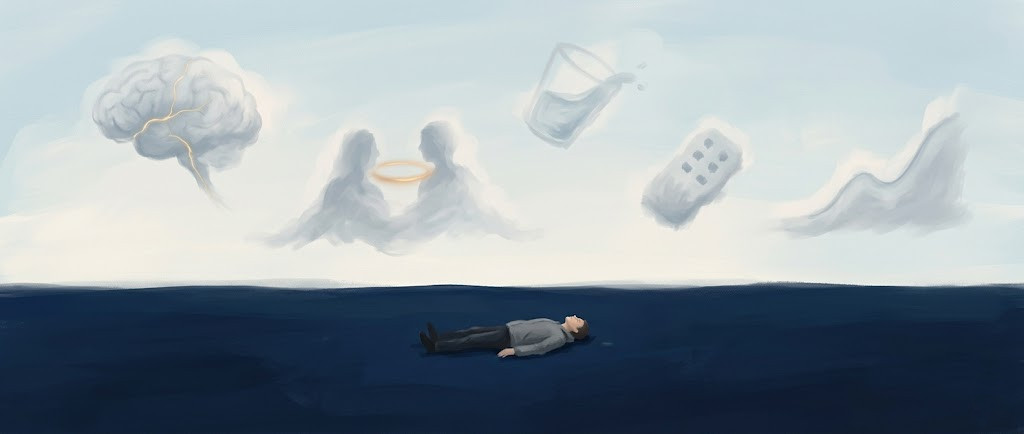
Almost eighteen months. And for once, this post is being written without the fairground ride, without the fish tank, without a burning jaw. It's being written in a calm moment, which is rare enough to be worth noting.
The previous post was called "Hold On". It asked questions in the thick of the pain, when the answers weren't there yet. They're here now. So here's the after, and the after is good.
The verdict
Let's start with what matters.
The dystonias are gone. Not "reduced". Not "improved". Gone. Those cramps, those abnormal postures, those muscles locking into impossible positions, stopping me from writing, making every pen an instrument of torture, making me injure myself when I pushed too hard: gone. The result is there, clear and measurable. I can write an X to sign my name. Before, that was compromised. Now, it's a given.
The myoclonias, on the other hand, are still there. Not always, not everywhere, but there. When I'm tired, they come back. When I pour myself a drink, my hand still trembles a little, and it's better not to fill the glass to the brim. And drinking directly from a glass is still tricky: I'm afraid of putting it into my nose. Conditioned fear from years of myoclonias, or actual myoclonias still present? Honestly, at this point, I can't tell the difference anymore. To be determined. It's not perfect. It's incomparably better.
The verdict is positive. Not triumphant, not miraculous, positive. And measured against what my life was before, positive is already enormous.
Was it the right call?
In "Hold On", that question came up every three lines. It came up especially at night, when the post-adjustment sensations were at their peak and reason was at its lowest.
The answer is yes.
Except when I have a headache, or when the wire under the skin itches a little. Those moments exist. They'll probably keep existing. But it's done. There's no going back, and the fact that it's irreversible is no longer a source of dread. It's a fact, like the other facts of my life. You deal with it.
The button
In "Hold On", I described nearly switching off the stimulator. More than once. That what held me back, at three in the morning, was an artificial intelligence giving me a reason not to do it.
Prof. Karachi solved this differently. She programmed four progressive settings onto my remote control. Now, between "fully on" and "fully off", there are steps. I can turn it down a little. I can adjust. I'm no longer facing a binary switch; I'm facing a dimmer. That's not a small thing. Knowing I can go down a notch without stopping everything radically changes the nature of the choice. You don't panic the same way when you have options.
The jaw
In "Hold On", I'd flagged the jaw as a new, worrying symptom, potentially a sign that the current was tickling fibres it shouldn't be. I said I'd send an email to the centre.
We went back as an emergency a week later. They turned it down a little. That was enough.
End of episode.
That's also the reality of deep brain stimulation: sometimes the solution is simple, quick, a small adjustment, and the symptom disappears. Access to care makes all the difference. Knowing you can call, that you can come in, that you won't be left alone with a frightening symptom: that's concrete security.
How long
The answer, now that I have enough adjustments to work out an average: between six and eight days. That's what a significant adjustment costs. Six to eight days of fairground ride, fish tank, Captain Haddock nights, and then it passes. It always passes.
That's not much and it's a lot. It's not much on the scale of what it gives you afterwards. It's a lot when you're in it. But at least now, we know. And knowing it's six to eight days, not two weeks, not a month, changes something. The horizon exists. It's at a known distance.
The May appointment
May appointment: no changes.
Not because there was nothing to adjust. Because I'm getting married in June.
You don't touch the brain six weeks before a wedding. It's not an official medical rule, it's common sense: no post-adjustment period during the preparations, no fairground ride during the ceremony, no fish tank for the honeymoon. The brain can wait. The wedding can't.
Why me
That was the fundamental question, the one that precedes all the others, the one that goes back before the diagnosis, before the electrodes, before everything.
I've never really liked living life on easy mode.
That's not a quip. It's an observation about myself that took years to formulate. The things that have mattered in my life, the real ones, are rarely the ones that arrived on a silver platter. Difficulties have a way of making things real. I'm not saying disability is a gift — that would be obscene. I'm saying I've learned to do something with it, and that capacity, to make something of obstacles rather than be crushed by them, doesn't come from nowhere. It comes from this. From all of it. From secondary school, from the adjustments, from the Captain Haddock nights, and from having held on regardless.
Hold on
Almost eighteen months. The word "hold on" has lost a little of its urgency.
Not because everything is sorted. The myoclonias are there when I'm tired, and the wire itches sometimes, and there will be more adjustments, more after-days, more fairground rides. That's the reality of deep brain stimulation: it's not an operation you have once and forget. It's a long-term relationship with a machine in your head.
But "hold on" has changed meaning. At first, holding on meant not switching off. Not cracking. Surviving the days after. Now it means something else: keep moving forward, with all of this, in spite of all of this, sometimes because of all of this.
Rose Marie is no longer "what keeps me holding on". She's here. She's arriving. We're getting married in June. And when I think about that, the fairground ride stops, the jaw relaxes, and there's no longer really a question left to answer.
On top of that, I'm picking up a project that's been close to my heart for a while: a disability monitoring tool for research. The idea is to better document what people like me go through, to make that data useful, to stop the experience of disability from staying stuck in heads and blog posts. It's exactly the kind of project that suits me: starting from lived experience and making something that's useful to others.
I'm very happy. That's simple, direct, and true.
I hope you are too. And if not, go and do something kind for someone. A small, simple, free gesture. It does the most good possible, to the one who receives it and to the one who gives it.
So we move forward.